The Gut-Brain Connection: A New Perspective Through Polyvagal Theory
0%
Polyvagal theory, developed by Dr. Stephen Porges, offers a revolutionary framework for understanding the intricate relationship between the gut and the brain[1]. This theory provides insights into the complex bidirectional communication pathways that underpin gut-brain interactions, shedding new light on disorders of gut-brain interaction (DGBI)[4].
The Three-Stage Model of Autonomic Regulation
Polyvagal theory proposes a three-stage evolutionary model of autonomic regulation:
- Dorsal Vagal System: The most primitive system, associated with immobilisation and energy conservation.
- Sympathetic Nervous System: Enables mobilisation, driving fight-or-flight responses.
- Ventral Vagal Complex (VVC): Unique to mammals, this system integrates the vagus nerve's myelinated fibres, promoting social engagement and efficient regulation of visceral organs[10].
The VVC acts as a "neural brake" on the heart and gut, dynamically balancing parasympathetic and sympathetic influences to maintain homeostasis[10].
The Vagus Nerve: A Key Player in Gut-Brain Communication
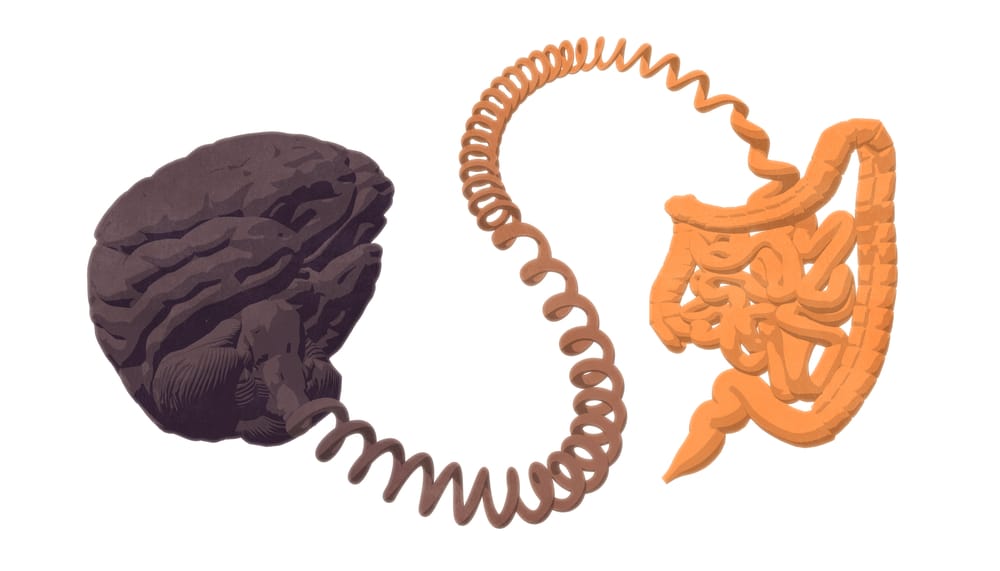
The vagus nerve plays a crucial role in the gut-brain axis, facilitating bidirectional communication between the central nervous system and the gastrointestinal tract[6]. This nerve transmits signals from the gut to the brain (afferent pathways) and from the brain to the gut (efferent pathways), enabling rapid adjustments to environmental and physiological changes[9].
Disorders of Gut-Brain Interaction (DGBI)
DGBI encompasses conditions like irritable bowel syndrome (IBS) and functional dyspepsia[8]. Polyvagal theory reframes these conditions by highlighting the role of autonomic dysregulation. Research suggests that vagal efficiency (VE) - the capacity of vagal pathways to regulate heart and gut functions - is often impaired in individuals with DGBI[4].
The Immune System and Polyvagal Theory
The vagus nerve plays a critical role in regulating immune responses through the "inflammatory reflex"[1]. Chronic stress can impair the vagus nerve's ability to regulate inflammation effectively, contributing to low-grade chronic inflammation often observed in conditions like IBS and inflammatory bowel disease (IBD)[7].
Nutritional Interventions for Autonomic Balance
Diet significantly impacts the gut-brain axis. Anti-inflammatory diets rich in omega-3 fatty acids, polyphenols, and prebiotic fibres support vagal activity by enhancing gut microbiota health and reducing systemic inflammation[3]. Personalised dietary interventions may help restore autonomic balance and improve VE, potentially mitigating symptoms of DGBI[5].
Actionable Insights for Healthcare Professionals
- Assess autonomic nervous system function, gut microbiome, and nutritional status to identify potential contributors to DGBI[8].
- Implement personalised dietary interventions to restore autonomic balance and improve VE[3].
- Consider anti-inflammatory diets to support vagal activity and reduce systemic inflammation[5].
- Educate patients on stress management techniques to mitigate the negative effects of chronic stress on the gut-brain axis[6].
By understanding the critical role of the vagus nerve in modulating gut function, immune responses, and inflammation, healthcare professionals can develop targeted interventions to restore autonomic balance and promote optimal health[4].
Citations:
- https://pubmed.ncbi.nlm.nih.gov/30953358/
- https://www.frontiersin.org/journals/neuroscience/articles/10.3389/fnins.2022.820106/full
- https://www.owlstonemedical.com/about/blog/2023/jun/27/breath-gut-brain-axis/
- https://pubmed.ncbi.nlm.nih.gov/39344751/
- https://pmc.ncbi.nlm.nih.gov/articles/PMC6371005/
- https://integraleyemovementtherapy.com/polyvagal-theory-the-gut-brain-axis/
- https://onlinelibrary.wiley.com/doi/full/10.1002/dev.21852
- https://www.mayoclinicproceedings.org/article/S0025-6196(22)00618-8/fulltext
- https://pmc.ncbi.nlm.nih.gov/articles/PMC4367209/
- https://www.frontiersin.org/journals/integrative-neuroscience/articles/10.3389/fnint.2022.871227/full


Antony Haynes, BA(Hons), mBANT, mCNHC, is a Registered Nutritionist and co-founder of Nutri-Link Ltd. With over 34 years in private practice and 19,000+ patients supported, he leads Nutri-Link’s technical services and practitioner education. Antony manages the Clinical Education Forum and presents webinars and seminars nationwide. He’s an award-winning author of The Insulin Factor and The Food Intolerance Bible, and a respected lecturer in nutritional therapy. Trained at ION, he’s registered...