

Thyroid Health Through a Whole‑Systems Lens
0%
Thyroid health through a whole‑systems lens
The thyroid gland may be small, like a butterfly tucked in the neck, but it packs a punch in keeping you energised, at a healthy weight, and feeling good overall. When it works right, you barely notice it. But if it’s underactive (hypofunction) or overactive (hyperfunction), life can feel out of whack. In this blog, we will break it down simply: what it does, common issues such as hypo and hyper thyroid, factors that can influence it and practical ways to support it.
What is the thyroid and what does it produce?
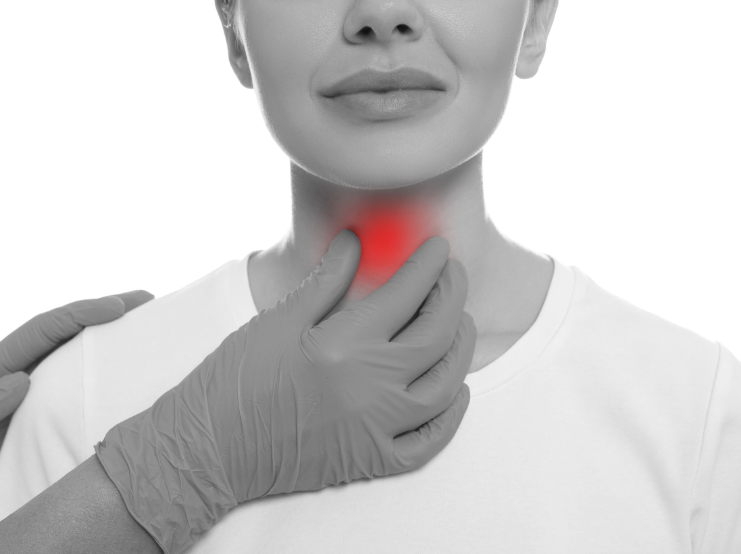
The thyroid is a small, butterfly-shaped gland located at the base of your neck, just below your Adam’s apple. Despite its size, it plays a major role in regulating how your body uses energy.
Its main job is to produce hormones that act like your body’s ‘gas pedal’, controlling how fast or slow your cells work. The two key hormones are thyroxine (T4) and triiodothyronine (T3). The thyroid produces mostly T4, which the body then converts into the much more active T3 when needed.
These hormones influence nearly every system in the body, including heart rate, blood pressure, body temperature, digestion, mood, muscle strength, skin health and even hair growth. In simple terms, they help turn the food you eat into usable energy, keeping your metabolism running smoothly.
The thyroid doesn’t operate on its own, it’s regulated by the pituitary gland in the brain, which releases thyroid-stimulating hormone (TSH). When T3 and T4 levels are low, TSH increases to signal the thyroid to produce more hormones. When levels are too high, TSH decreases. This feedback loop helps maintain balance.[i]
However, this system can be influenced by factors such as nutrient status, inflammation, stress hormones, and overall metabolic health. In some cases, even when standard blood tests appear ‘normal’, thyroid hormone activity at the tissue level may not be optimal, particularly in the presence of chronic stress, immune dysfunction, or nutrient deficiencies.
Thyroid hormones affect virtually every cell in the body, binding to receptors in the brain, muscles, bones and other tissues. They are essential throughout life, supporting growth, brain development, and day-to-day energy production[ii]
Genetics – laying the groundwork, not writing the story
Genetics play an important role in thyroid health, especially in autoimmune thyroid disease. Variations in genes involved in immune regulation, thyroid hormone signalling and iodine handling can increase susceptibility to dysfunction.
Certain genetic patterns are associated with –
- Higher risk of autoimmune thyroid conditions
- Altered thyroid receptor sensitivity
- Differences in thyroid hormone conversion and clearance
However, genes are not destiny. Gene expression is strongly influenced by environmental inputs such as diet, infections, stress load and toxin exposure. This is why individuals with a strong family history of thyroid disease may remain healthy, while others develop symptoms after a period of physiological stress or immune challenge.
Autoimmunity and immune dysregulation
Autoimmune activity underpins the most common thyroid conditions seen in clinical practice. In Hashimoto’s thyroiditis, the immune system gradually attacks thyroid tissue, often leading to hypothyroidism. In Grave’s disease, immune antibodies stimulate excessive thyroid hormone production.
Key drivers of thyroid autoimmunity include –
- Loss of immune tolerance, including to food antigens such as gluten
- Chronic low-grade inflammation
- Imbalance between regulatory and inflammatory immune responses
This immune vulnerability is shaped by genetics, but often triggered or intensified by dietary insufficiencies, gut dysfunction, infections, hormonal shifts and chronic stress.[iii]
Nutrition: essential nutrients for thyroid function
Thyroid hormone synthesis and activation rely on nutrients, both deficiencies and excesses can disrupt thyroid balance.
Key nutrients include –
- Iodine – essential for T4 and T3 production, but excessive intake can exacerbate autoimmunity
- Selenium – required for thyroid hormone conversion and antioxidant protection within the gland
- Iron - necessary for thyroid hormone synthesis
- Zinc – supports T3 receptor activity and immune regulation
- Vitamin A and B12 – influence thyroid signalling and metabolic regulation
- Vitamin D – obtained from sunlight, some foods and supplements to support immune health and thyroid regulation. Read more about Vitamin D.
Recent research highlights the importance of the diet-gut-thyroid axis, showing that dietary quality and microbiome diversity influence nutrient availability, immune tolerance and thyroid hormone metabolism.
Highly restrictive diets, long-term low-energy intake, or nutrient-poor food patterns can quietly undermine thyroid resilience over time.
The gut–thyroid connection
Whilst most of the T4 to T3 conversion is in the peripheral tissues, our gut is also involved in this important step. Our gut microbiota directly influences the metabolism of T3 to T4 hormones through micronutrient absorptions, microbial enzymes and immune cell interactions. Alterations in our microbiota may contribute to hypo and hyper thyroid issues. [iv]
Gut dysbiosis, whether driven by infections, medications, stress or diet, has been linked to higher thyroid antibody levels and impaired hormone activation. Research increasingly connects microbiome disruption to autoimmune thyroid disease, particularly in genetically susceptible individuals.
Thyroid health and support cannot be in isolation from gut health.
Infections as thyroid triggers
Viral and bacterial infections are now recognised as potential triggers for thyroid dysfunction and autoimmunity, the most common include[v] –
- Epstein-Barr virus (EBV)
- Human herpesvirus 6 (HHV-6)
- Parvovirus B19
- SARS-CoV-2 (COVID-19)
These infections may promote molecular mimicry (the immune system confuses a foreign microbe with our own tissue), inflammatory signalling and immune exhaustion, increasing the risk of thyroid tissue reactivity in susceptible individuals.
Not everyone exposed to these infections will develop thyroid issues. However, combined with nutrient depletion, chronic stress or genetic predisposition, infections may act as an important tipping point.
Stress, the HPA axis and thyroid function
The thyroid is closely interconnected with the hypothalamic-pituitary-adrenal (HPA) axis, which governs the stress response.[vi]
Chronic stress can influence thyroid function by
- Reducing conversion of T4 to active T3
- Increasing production of reverse T3 (inactive form which blocks T3)
- Suppressing TSH signalling
- Shifting immune balance toward inflammation
Clinically, this may present as hypothyroid symptoms despite normal laboratory values. It also explains why individuals under prolonged stress may struggle to respond predictably to thyroid-focused interventions alone.
Supporting adrenal resilience, circadian rhythm integrity and stress adaptability is therefore an essential part of thyroid health.
Hormonal transitions and thyroid sensitivity
Thyroid dysfunction frequently emerges during key hormonal transitions, including –
- Pregnancy and the postnatal period
- Perimenopause and menopause
- Periods of hormonal contraception changes
Oestrogen influences thyroid-binding globulin (TBG), which affects the availability of free thyroid hormone (FT3) at the tissue level. Altered oestrogen metabolism can therefore contribute to thyroid symptoms expression even when total hormone levels appear adequate.
This hormone interplay helps explain why thyroid conditions are significantly more prevalent in women and often fluctuate across life stages.[vii]
Environmental load and thyroid dysfunction
Environmental exposures increasingly challenge thyroid regulation. Certain chemicals act as endocrine disruptors, interfering with hormone synthesis, transport or receptor binding.
Substances of concern include –
- Bisphenols and phthalates
- PFAS compounds (highly persistent forever chemicals)
- Heavy metals
Air pollution and microplastics have also been linked to altered thyroid signalling and immune activation. Over time, cumulative environmental load may contribute to subtle thyroid dysregulation, particularly in individuals with compromised detoxification capacity or nutrient insufficiency.
Lifestyle inputs and metabolic signalling
The thyroid responds dynamically to overall metabolic safety signals. Factors that frequently suppress thyroid activity include –
- Chronic under-fuelling or restrictive eating
- Poor sleep quality and circadian disruption
- Excessive training load without recovery
- Smoking
- Poor diet
- Excess alcohol and more
This is why restrictive eating and intermittent fasting may not be so suitable for women who are about 5X more likely to experience a thyroid hormone imbalance.
From a physiological standpoint, down-regulating thyroid output can be an adaptive response when the body perceives threat or scarcity.
Restoring metabolic confidence, through adequate nutrition, recovery and rhythm, is therefore foundational to thyroid support.
Bringing it together from a whole systems lens
Thyroid health is best viewed through a whole-systems lens, rather than focusing solely on hormone replacement or numbers on a lab report, meaningful thyroid support considers –
- Genetic susceptibility and immune balance
- Nutrient sufficiency and bioavailability
- Detoxification and elimination pathways
- Gut integrity and microbial health
- Stress physiology and hormonal resilience
- Environmental and lifestyle inputs
This integrated understanding supports more personalised, sustainable strategies that align with the body’s natural regulatory mechanisms.
The thyroid does not operate in isolation. It reflects the body’s cumulative response to nutrition, immune challenges, stress and environmental load.
By shifting the focus from ‘fixing the thyroid’ to supporting the systems that regulate it, we create a more robust foundation for long-term thyroid health and metabolic resilience.
Are you a practitioner or student looking to deepen your understanding of thyroid health?
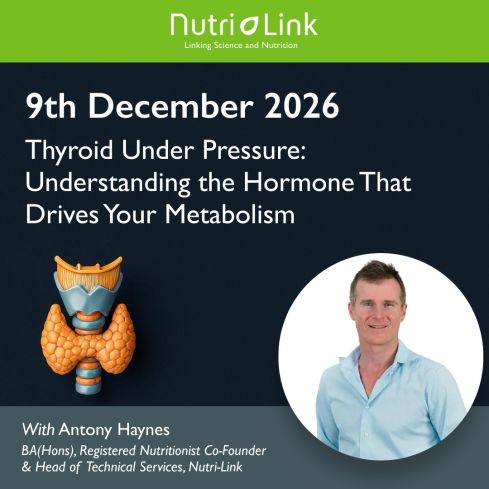
Join our upcoming webinar with Antony Haynes on December 9th 2026 to explore the factors contributing to thyroid imbalance and how best to support patients.
To find our more & secure your place visit:
Practitioners and students registered with Nutri-Link can book our expert-led webinars for free before they go live. After the event, a charge will apply to access the recording.
References
[i] https://www.ncbi.nlm.nih.gov/books/NBK500006/
[ii] https://academic.oup.com/jes/article/3/7/1345/5489459
[iii] https://www.mdpi.com/2227-9059/12/8/1788
[iv] Cadena-Ullauri S, Guevara-Ramírez P, Paz-Cruz E, Ruiz-Pozo VA, Tamayo-Trujillo R, Zambrano AK. Microbiota dysbiosis impact on the metabolism of T3 and T4 hormones and its association with thyroid cancer. Front Cell Dev Biol. 2025 Jun 2;13:1589726
[v] Li Y, Li W. Viral infection and thyroid disorders: a narrative review. Front Microbiol. 2025 Jun 13;16:1625179
[vi] https://journals.sagepub.com/doi/10.1089/thy.2022.0258
[vii] https://www.sciencedirect.com/science/article/pii/S1568997225000631


Karen Devine, CNHC Registered Nutritionist and Naturopath, is a Colonic Hydrotherapist and Functional Medicine practitioner (AFMCP). Since 2007, she has provided technical support for Nutri-Link Ltd, advising practitioners and patients on nutritional products. Trained at The Plaskett College, Karen has run her own clinic since 1999 and continues to consult privately. She regularly attends postgraduate seminars to stay current in functional medicine. Karen has appeared on The Spa of Embarrassing Illnesses...