


Vitamin D Supplements
Vitamin D Supplements for Every Budget
How much vitamin D do you need?
In the UK, adults and children aged 1 year and over need 10 micrograms (400 IU) of vitamin D a day. Government advice is that everyone should consider taking a daily vitamin D supplement during autumn and winter, when sunlight may not provide enough vitamin D.
Some people at higher risk of not getting enough vitamin D may be advised to take a supplement throughout the year.
How Vitamin D Supports the Body
Often called the “sunshine vitamin”, vitamin D contributes to several important functions in the body.
Vitamin D plays several important roles in the body. It contributes to the normal function of the immune system, maintenance of normal bones and teeth, and normal muscle function.
From a simple, flexible vitamin D3 liquid to vegan D3 + K2 + A and a comprehensive formula containing all four fat-soluble vitamins, explore the range and find the format that best fits your needs.
Why is Vitamin D important?

Normal immune function
Vitamin D contributes to the normal function of the immune system.

Maintenance of normal bones
Vitamin D contributes to the maintenance of normal bones and contributes to the normal absorption and utilisation of calcium and phosphorus.

Normal muscle function
Vitamin D contributes to the maintenance of normal muscle function.

Maintenance of normal teeth
Vitamin D contributes to the maintenance of normal teeth.
Find a vitamin D formula that fits your routine
Vitamin D supplements aren't all the same. The range includes different strengths, formats and combinations of nutrients, so you can choose an option appropriate to your dietary preferences and supplementation needs.
Compare some of our Vitamin D formulas at a glance
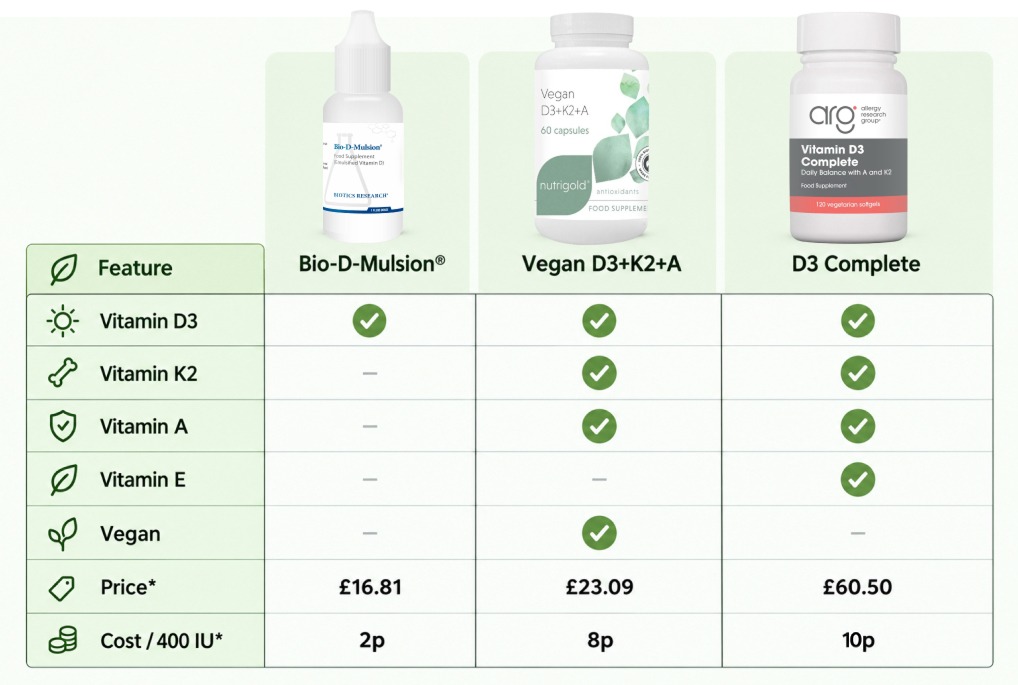
*Prices and cost-per-400-IU calculations are taken from the supplied October 2026 comparison.
Which vitamin D supplement should I choose?
Vitamin D Questions & Answers
q: What is Vitamin D?
Vitamin D is a fat-soluble vitamin that helps regulate calcium and phosphate in the body. It contributes to the maintenance of normal bones, teeth and muscle function, as well as the normal function of the immune system. The body can make vitamin D when skin is exposed to sunlight, but in the UK we do not make enough vitamin D from sunlight between October and early March. [nhs.uk], [nutrilink.co.uk]
q: How much Vitamin D do I need?
Adults and children aged 1 year and over need 10 micrograms (400 IU) of vitamin D per day, according to NHS guidance. During autumn and winter, everyone should consider taking a daily vitamin D supplement because sunlight in the UK is not strong enough for the body to make sufficient vitamin D. Some people at higher risk of deficiency are advised to supplement throughout the year.
Individual requirements can vary, particularly if you have a diagnosed deficiency or medical condition, so speak to a healthcare professional if you're unsure which dose is appropriate for you.
q: What is the difference between Vitamin D2 and D3?
Both forms can help contribute to vitamin D intake. Vitamin D2 is typically sourced from plant-based ingredients, while vitamin D3 is commonly derived from lanolin, although vegan D3 sourced from algae is also available.
Nutri-Link offers a range of vitamin D3 supplements, including capsules and liquid drops, with vegan-friendly options available.
q: What is Vitamin K2?
Vitamin K2 is a form of vitamin K. Vitamin K contributes to normal blood clotting and the maintenance of normal bones. Some vitamin D formulas combine vitamin D3 with K2, including Nutrigold Vegan D3+K2+A.
If you're taking anticoagulant medication, speak to your doctor or pharmacist before taking a supplement containing vitamin K.
q: Can I take Vitamin D with other supplements?
Vitamin D supplements are available both on their own and in combination with other nutrients. For example, some formulas combine vitamin D3 with vitamins A and K2, while others also include tocotrienols from the vitamin E family. These combination products can provide a convenient way to supplement multiple nutrients in a single formula.
If you already take a multivitamin or another supplement containing vitamin D, it is important to consider your total daily vitamin D intake from all sources.
If you are taking medication, have a medical condition, are pregnant or breastfeeding, or are unsure whether a supplement is suitable for you, seek advice from a qualified healthcare professional before use.
q: Which Vitamin D Product Should I Choose?
The most suitable vitamin D supplement will depend on your preferred format, the amount of vitamin D provided, and whether you are looking for vitamin D alone or in combination with other nutrients.
- Prefer a liquid format?
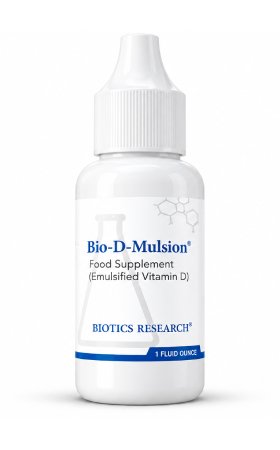
Bio-D-Mulsion® provides vitamin D3 in liquid drops for those who prefer an alternative to capsules or softgels. - Looking for a vegan option?
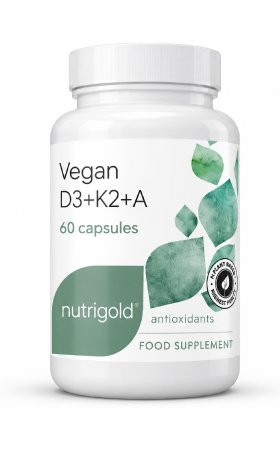
Nutrigold Vegan Vitamin D3 2000 IU provides vitamin D3 from an algal source. Nutrigold Vegan D3+K2+A combines plant-derived vitamin D3 with vitamins K2 and A. - Looking for a combination formula?
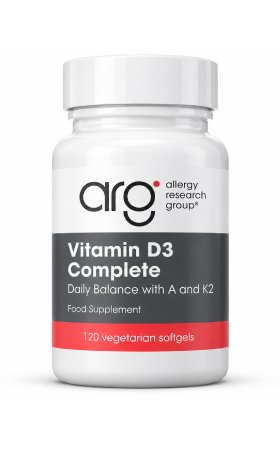
Vitamin D3 Complete provides vitamin D3 alongside vitamins A and K2 and includes tocotrienols from the vitamin E family. - Considering a higher-strength product?
Bio-D-Mulsion Forte® provides 2,000 IU (50 μg) of vitamin D3 per drop. Higher-strength supplements may not be appropriate for everyone, and individual requirements can vary.
q: Is there a vegan Vitamin D?
Nutrigold Vegan Vitamin D3 2000 IU provides 2,000 IU (50 μg) of vitamin D3 from an algal source in a vegan capsule. For those looking for a combination formula, Nutrigold Vegan D3+K2+A provides 2,000 IU (50 μg) of vitamin D3 alongside vitamins K2 and A, also in a vegan capsule.
q: What is the difference between Bio-D-Mulsion and Bio-D-Mulsion Forte?
Both Bio-D-Mulsion® and Bio-D-Mulsion Forte® are liquid vitamin D3 products from that use a micro-emulsified delivery system, dispersing vitamin D oil into microscopic particles.
The main difference is strength. Bio-D-Mulsion Forte® provides 2,000 IU of vitamin D3 per drop, making it the higher-strength option.
Why choose Nutri-Link?

Unparalleled Expertise
Our team brings extensive experience in clinical nutrition, ensuring that every product we offer is backed by solid scientific research and practical application.

Quality and Efficacy
We meticulously select our nutritional supplements based on their quality and efficacy, guaranteeing that customers receive only the best for their health needs.

Comprehensive Education
Nutri-Link is committed to providing quality education about nutrition and health. Our resources empower healthcare professionals to make informed choices about their dietary supplement recommendations and overall wellness. That’s why over 8000 practitioners trust us with their patients needs.